By popular demand, here are the printable forms and worksheets I once offered on the website for my book Tarot Journaling.
The book has been out of print for a while now, so I stopped maintaining the companion site. (Maybe that was a mistake, since you can still get the Kindle edition.)
I hadn’t thought about these files lately — but somewhere, someone must be talking about them, because recently I’ve had several requests to make them available again. Looking at them today, I couldn’t believe I first created them in 2005. They’re like the Dead Sea Scrolls!
Someday, I plan to revise the Tarot Journaling manuscript and release a new and expanded version of the book … but first, I have to paint my kitchen, do laundry, and finish three or four other books that are already in the pipeline.
In the meantime, feel free to download and use these PDFs. You’ll find five useful worksheets, along with a bonus PDF of plain lined paper and a coordinating cover image. Simply click the thumbnail images to download the full-size files.
. . . . . . . . . . . . . . . . . . . . . .
Will you do me a favor?
If you download the files, please take a moment to answer these questions so I can gauge your interest in a new edition of the Tarot Journaling guidebook.
. . . . . . . . . . . . . . . . . . . . . .
Tarot Journaling Forms and Worksheets
The following documents are designed for easy printing, with margins that are wide enough to accommodate a three-hole punch. Just hit “print,” punch the holes, and put the pages in a three-ring binder.
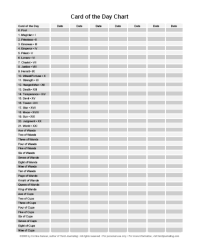
Card of the Day Chart
Keep a master list of all your daily one-card readings, and look for themes and patterns over time.
Suggestion: One copy of this chart will last you a long time, but you might want to print it on heavier stock. Continue reading









 Corrine Kenner